Mini and me
A 21-foot Mini-Transat racer has all the bells and whistles a solo racer would ever need, as well as some features the average sailor would never want.

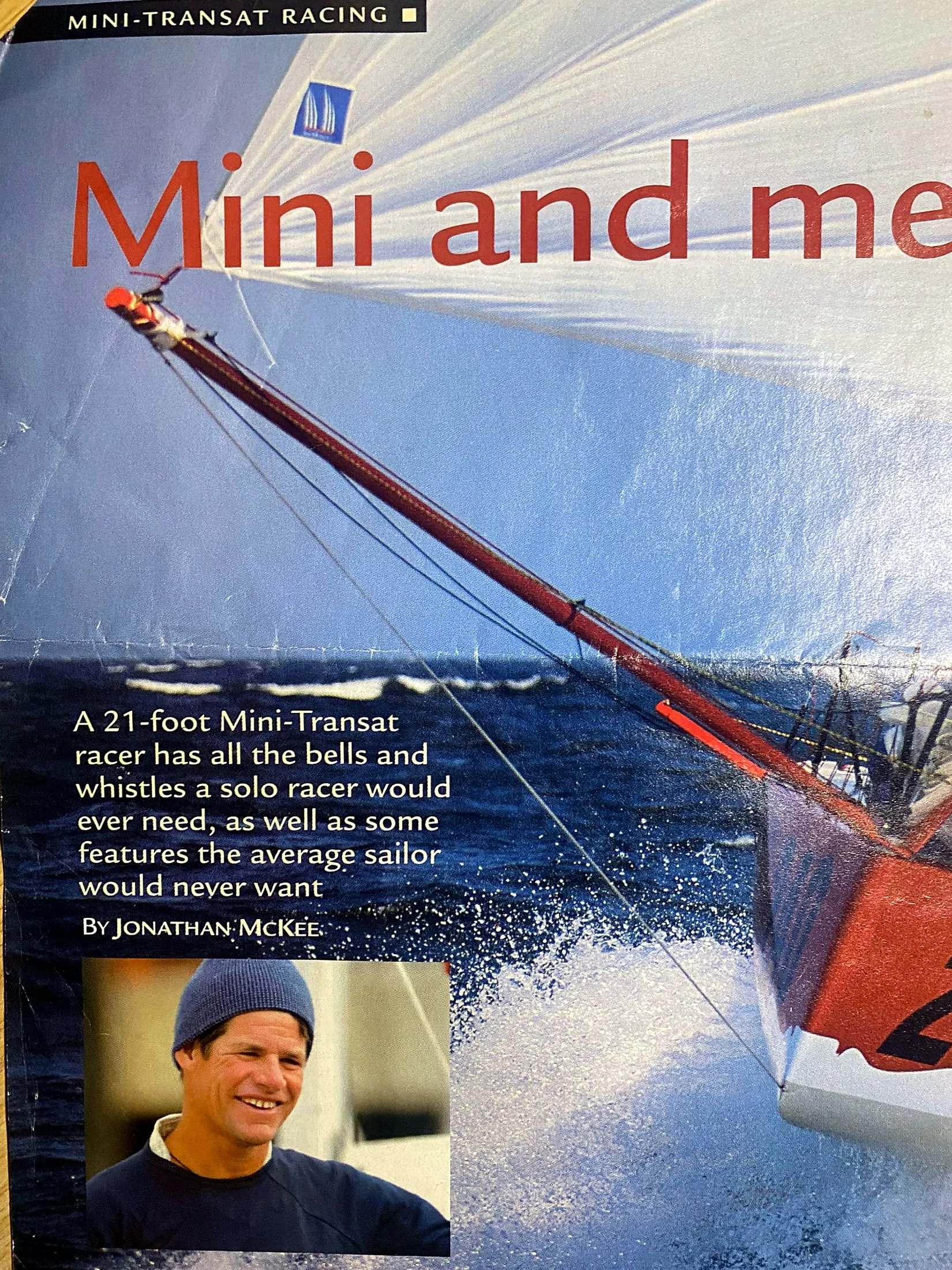
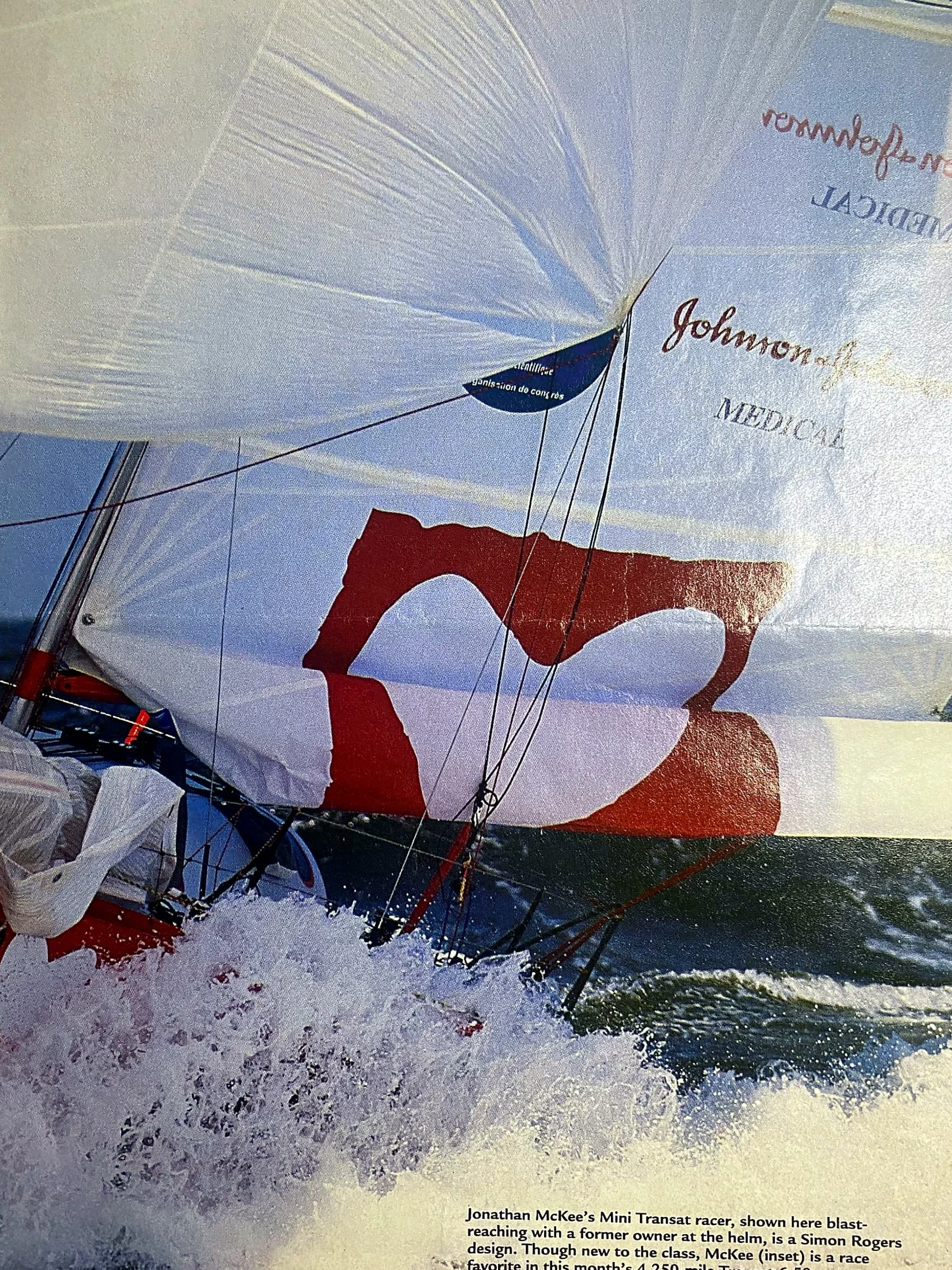
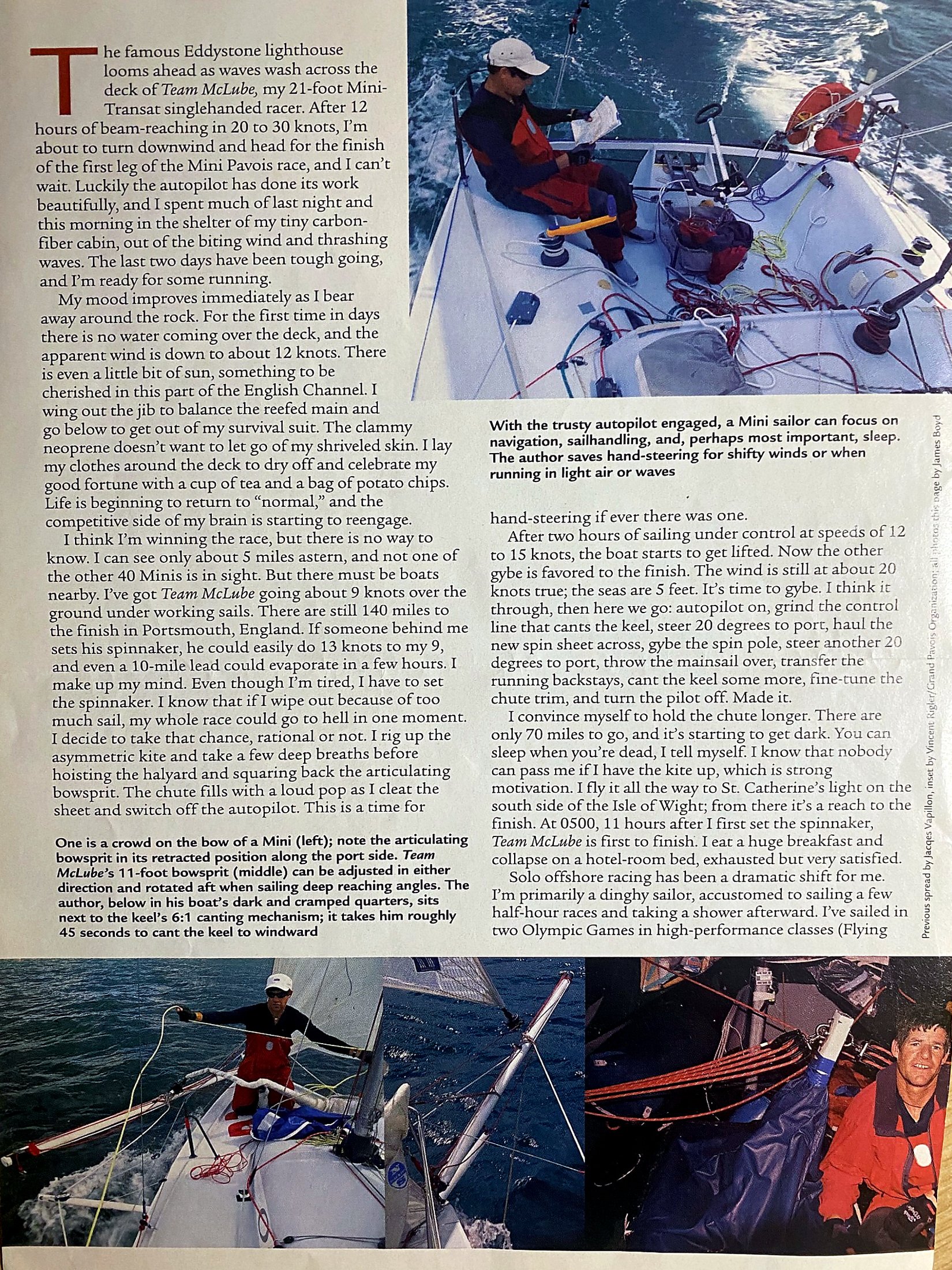
The original opening spread from the September 2003 SAIL feature.
The famous Eddystone lighthouse looms ahead as waves wash across the deck of Team McLube, my 21-foot Mini-Transat singlehanded racer. After 12 hours of beam-reaching in 20 to 30 knots, I’m about to turn downwind and head for the finish of the first leg of the Mini Pavois race, and I can’t wait. Luckily the autopilot has done its work beautifully, and I spent much of last night and this morning in the shelter of my tiny carbon-fiber cabin, out of the biting wind and thrashing waves. The last two days have been tough going, and I’m ready for some running.
My mood improves immediately as I bear away around the rock. For the first time in days there is no water coming over the deck, and the apparent wind is down to about 12 knots. There is even a little bit of sun, something to be cherished in this part of the English Channel. I wing out the jib to balance the reefed main and go below to get out of my survival suit. The clammy neoprene doesn’t want to let go of my shriveled skin. I lay my clothes around the deck to dry off and celebrate my good fortune with a cup of tea and a bag of potato chips. Life is beginning to return to “normal,” and the competitive side of my brain is starting to reengage.
I think I’m winning the race, but there is no way to know. I can see only about 5 miles astern, and not one of the other 40 Minis is in sight. But there must be boats nearby. I’ve got Team McLube going about 9 knots over the ground under working sails. There are still 140 miles to the finish in Portsmouth, England. If someone behind me sets his spinnaker, he could easily do 13 knots to my 9, and even a 10-mile lead could evaporate in a few hours. I make up my mind. Even though I’m tired, I have to set the spinnaker. I know that if I wipe out because of too much sail, my whole race could go to hell in one moment. I decide to take that chance, rational or not. I rig up the asymmetric kite and take a few deep breaths before hoisting the halyard and squaring back the articulating bowsprit. The chute fills with a loud pop as I cleat the sheet and switch off the autopilot. This is a time for hand-steering if ever there was one.
After two hours of sailing under control at speeds of 12 to 15 knots, the boat starts to get lifted. Now the other gybe is favored to the finish. The wind is still at about 20 knots true; the seas are 5 feet. It’s time to gybe. I think it through, then here we go: autopilot on, grind the control line that cants the keel, steer 20 degrees to port, haul the new spin sheet across, gybe the spin pole, steer another 20 degrees to port, throw the mainsail over, transfer the running backstays, cant the keel some more, fine-tune the chute trim, and turn the pilot off. Made it.
I convince myself to hold the chute longer. There are only 70 miles to go, and it’s starting to get dark. You can sleep when you’re dead, I tell myself. I know that nobody can pass me if I have the kite up, which is strong motivation. I fly it all the way to St. Catherine’s light on the south side of the Isle of Wight; from there it’s a reach to the finish. At 0500, 11 hours after I first set the spinnaker, Team McLube is first to finish. I eat a huge breakfast and collapse on a hotel-room bed, exhausted but very satisfied.
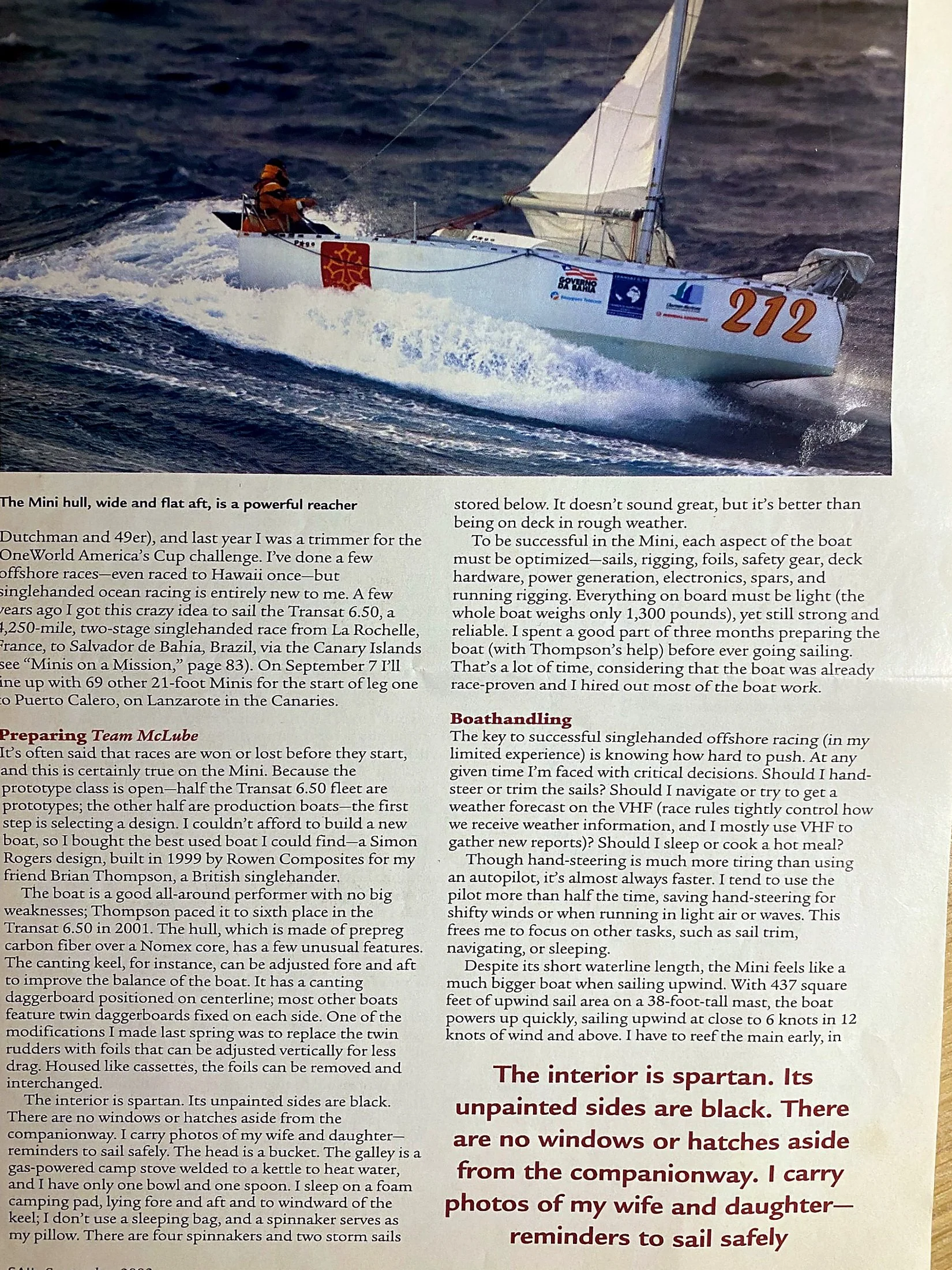
Solo offshore racing has been a dramatic shift for me. I’m primarily a dinghy sailor, accustomed to sailing a few half-hour races and taking a shower afterward. I’ve sailed in two Olympic Games in high-performance classes (Flying Dutchman and 49er), and last year I was a trimmer for the OneWorld America’s Cup challenge. I’ve done a few offshore races—even raced to Hawaii once—but singlehanded ocean racing is entirely new to me. A few years ago I got this crazy idea to sail the Transat 6.50, a 4,250-mile, two-stage singlehanded race from La Rochelle, France, to Salvador de Bahia, Brazil, via the Canary Islands (see “Minis on a Mission,” page 83). On September 7 I’ll line up with 69 other 21-foot Minis for the start of leg one to Puerto Calero, on Lanzarote in the Canaries.
Preparing Team McLube
It’s often said that races are won or lost before they start, and this is certainly true on the Mini. Because the prototype class is open—half the Transat 6.50 fleet are prototypes; the other half are production boats—the first step is selecting a design. I couldn’t afford to build a new boat, so I bought the best used boat I could find—a Simon Rogers design, built in 1999 by Rowen Composites for my friend Brian Thompson, a British singlehander.
The boat is a good all-around performer with no big weaknesses; Thompson paced it to sixth place in the Transat 6.50 in 2001. The hull, which is made of prepreg carbon fiber over a Nomex core, has a few unusual features. The canting keel, for instance, can be adjusted fore and aft to improve the balance of the boat. It has a canting daggerboard positioned on centerline; most other boats feature twin daggerboards fixed on each side. One of the modifications I made last spring was to replace the twin rudders with foils that can be adjusted vertically for less drag. Housed like cassettes, the foils can be removed and interchanged.
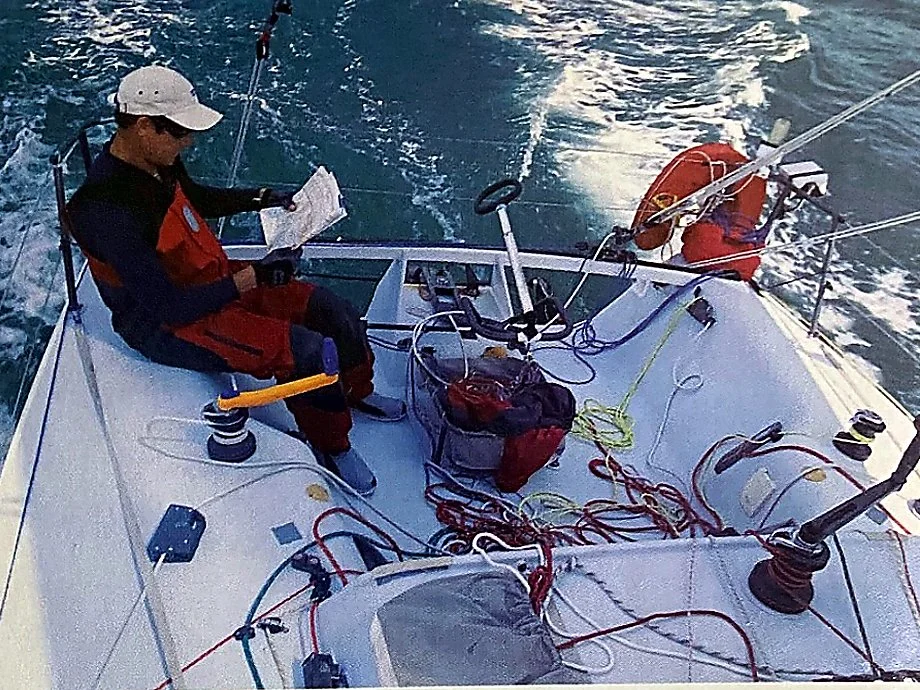
The interior is spartan. Its unpainted sides are black. There are no windows or hatches aside from the companionway. I carry photos of my wife and daughter—reminders to sail safely. The head is a bucket. The galley is a gas-powered camp stove welded to a kettle to heat water, and I have only one bowl and one spoon. I sleep on a foam camping pad, lying fore and aft and to windward of the keel; I don’t use a sleeping bag, and a spinnaker serves as my pillow. There are four spinnakers and two storm sails stored below. It doesn’t sound great, but it’s better than being on deck in rough weather.
“The interior is spartan. Its unpainted sides are black. There are no windows or hatches aside from the companionway. I carry photos of my wife and daughter—reminders to sail safely.”
To be successful in the Mini, each aspect of the boat must be optimized—sails, rigging, foils, safety gear, deck hardware, power generation, electronics, spars, and running rigging. Everything on board must be light (the whole boat weighs only 1,300 pounds), yet still strong and reliable. I spent a good part of three months preparing the boat (with Thompson’s help) before ever going sailing. That’s a lot of time, considering that the boat was already race-proven and I hired out most of the boat work.
Boathandling
The key to successful singlehanded offshore racing (in my limited experience) is knowing how hard to push. At any given time I’m faced with critical decisions. Should I hand-steer or trim the sails? Should I navigate or try to get a weather forecast on the VHF (race rules tightly control how we receive weather information, and I mostly use VHF to gather new reports)? Should I sleep or cook a hot meal?
Though hand-steering is much more tiring than using an autopilot, it’s almost always faster. I tend to use the pilot more than half the time, saving hand-steering for shifty winds or when running in light air or waves. This frees me to focus on other tasks, such as sail trim, navigating, or sleeping.
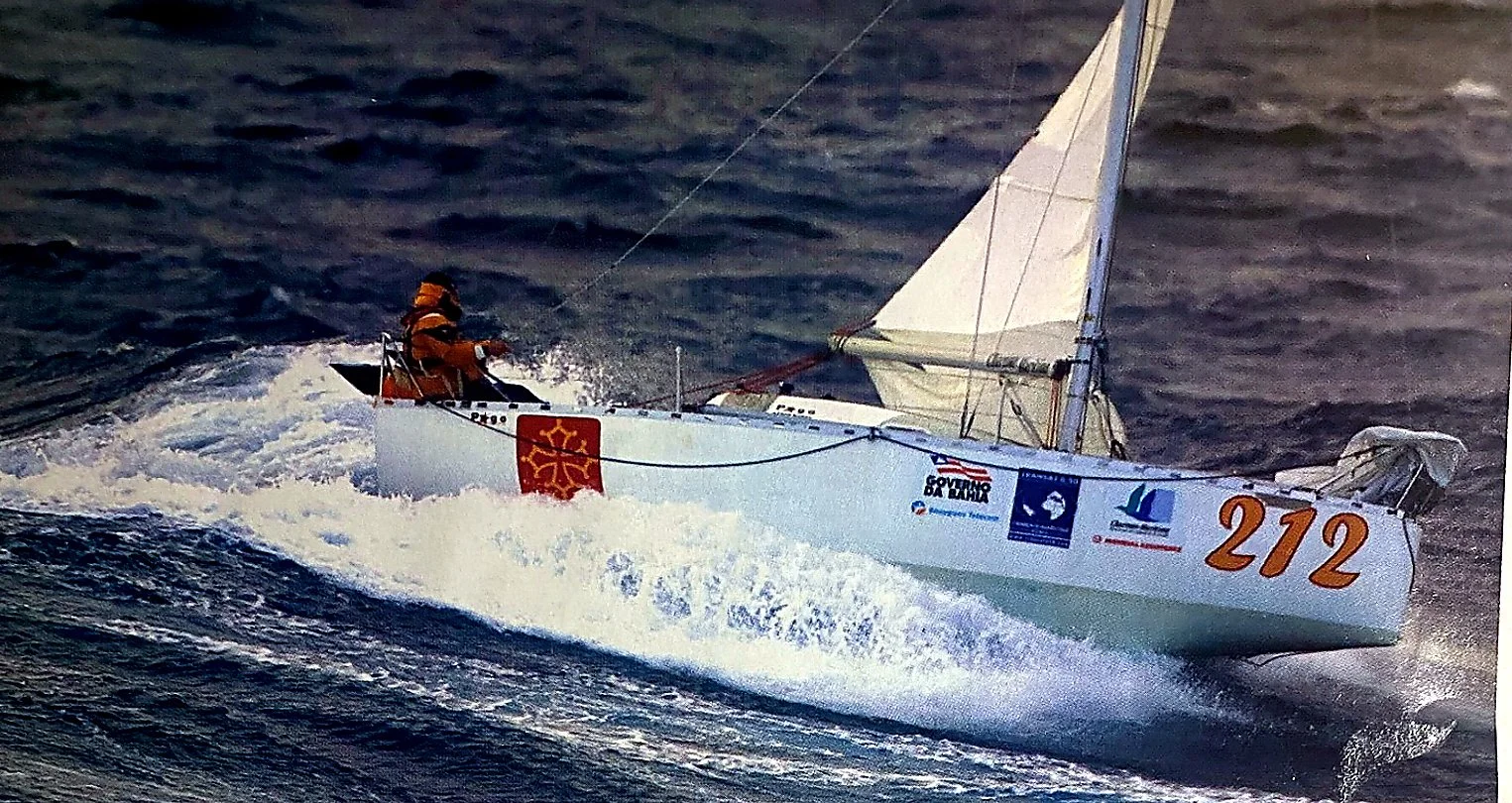
Despite its short waterline length, the Mini feels like a much bigger boat when sailing upwind. With 437 square feet of upwind sail area on a 38-foot-tall mast, the boat powers up quickly, sailing upwind at close to 6 knots in 12 knots of wind and above. I have to reef the main early, in about 15 knots. The jib needs to be reefed in about 20 knots, and the second reef goes in the main in at 25 knots. The sailplan stays well-balanced through the range of wind speeds, and the boat tracks well through waves, partly because of its considerable righting moment.
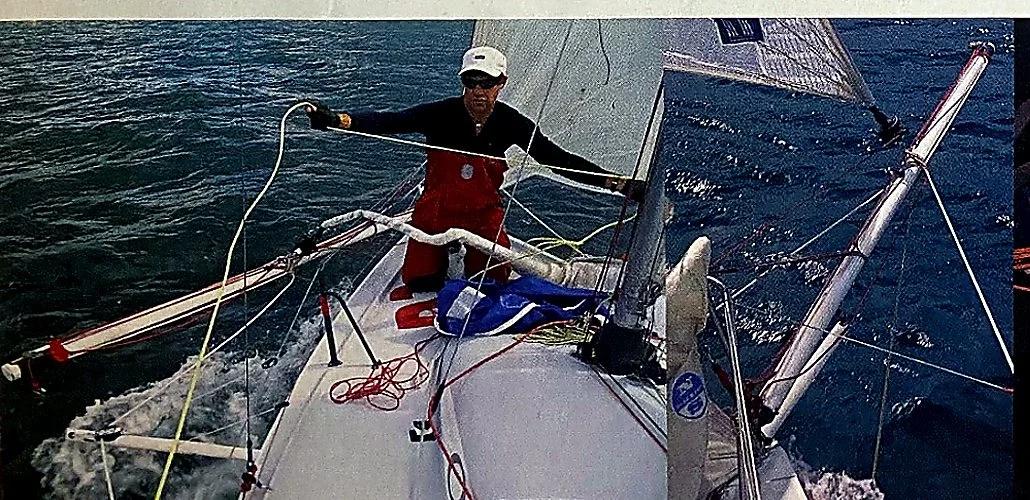
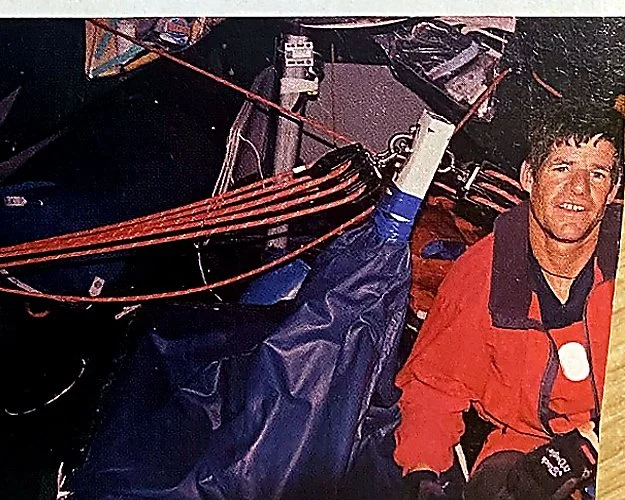
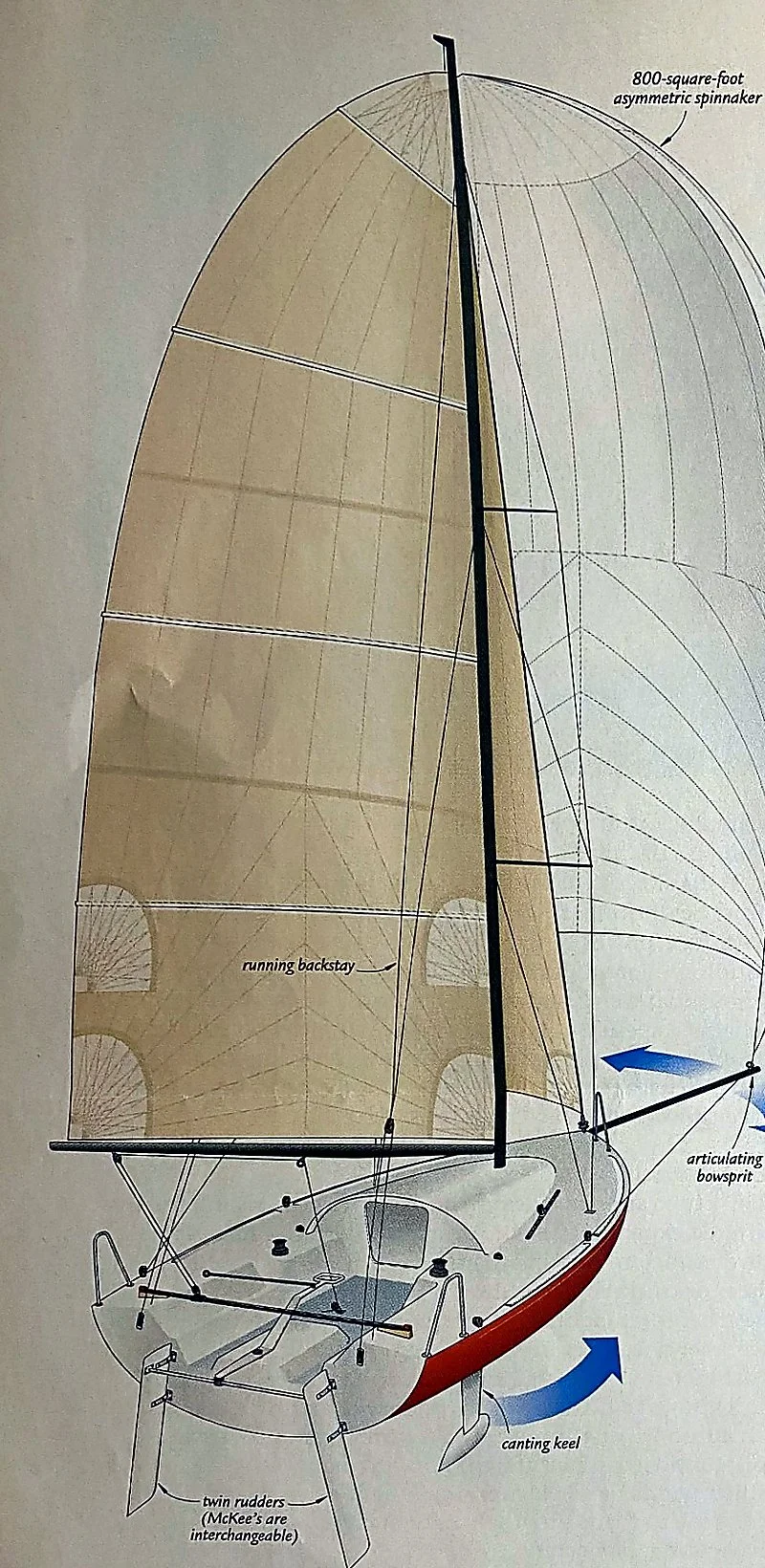
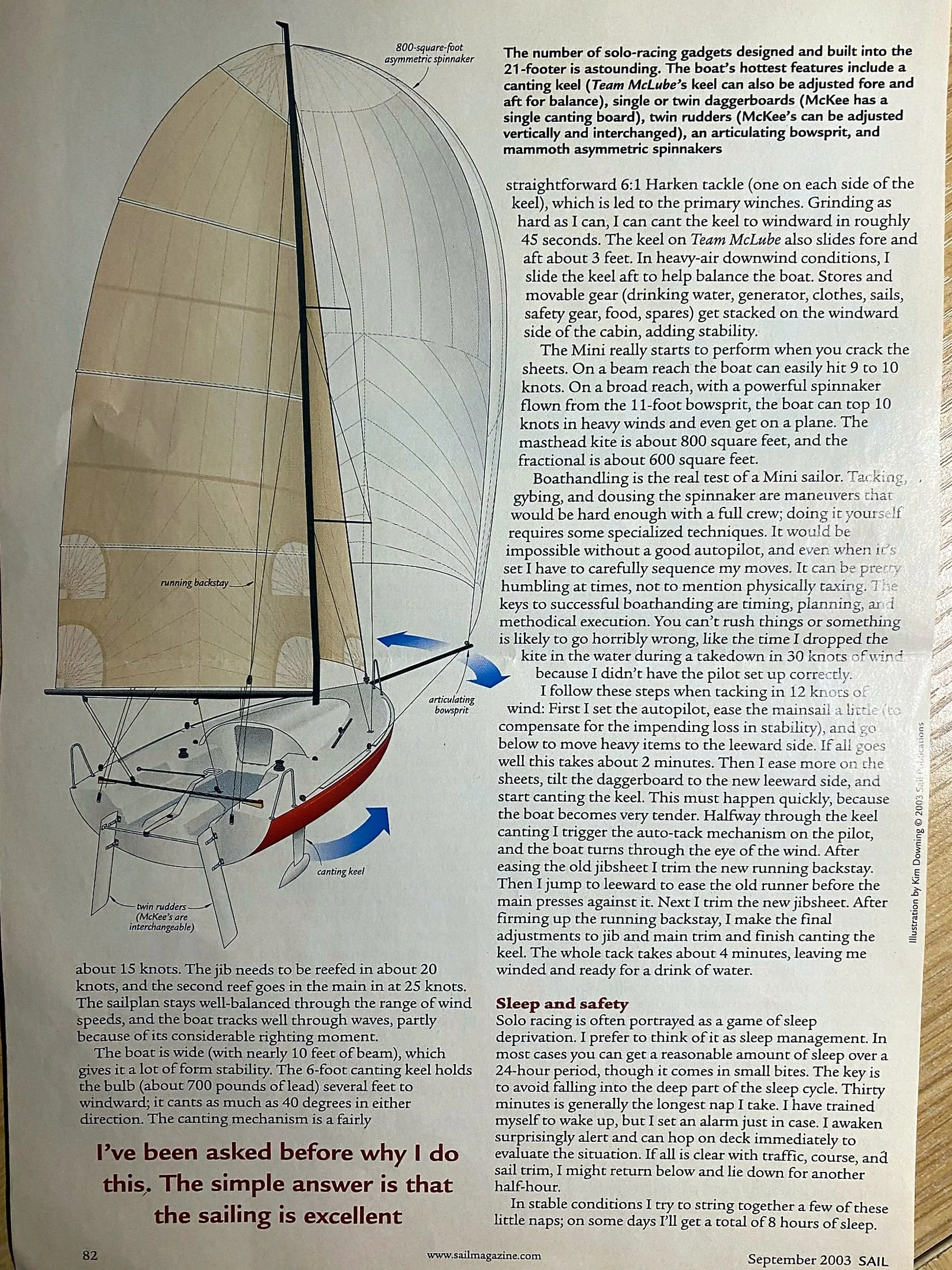
The boat is wide (with nearly 10 feet of beam), which gives it a lot of form stability. The 6-foot canting keel holds the bulb (about 700 pounds of lead) several feet to windward; it cants as much as 40 degrees in either direction. The canting mechanism is a fairly straightforward 6:1 Harken tackle (one on each side of the keel), which is led to the primary winches. Grinding as hard as I can, I can cant the keel to windward in roughly 45 seconds. The keel on Team McLube also slides fore and aft about 3 feet. In heavy-air downwind conditions, I slide the keel aft to help balance the boat. Stores and movable gear (drinking water, generator, clothes, sails, safety gear, food, spares) get stacked on the windward side of the cabin, adding stability.
The Mini really starts to perform when you crack the sheets. On a beam reach the boat can easily hit 9 to 10 knots. On a broad reach, with a powerful spinnaker flown from the 11-foot bowsprit, the boat can top 10 knots in heavy winds and even get on a plane. The masthead kite is about 800 square feet, and the fractional is about 600 square feet.
Boathandling is the real test of a Mini sailor. Tacking, gybing, and dousing the spinnaker are maneuvers that would be hard enough with a full crew; doing it yourself requires some specialized techniques. It would be impossible without a good autopilot, and even when it’s set I have to carefully sequence my moves. It can be pretty humbling at times, not to mention physically taxing. The keys to successful boathandling are timing, planning, and methodical execution. You can’t rush things or something is likely to go horribly wrong, like the time I dropped the kite in the water during a takedown in 30 knots of wind because I didn’t have the pilot set up correctly.
I follow these steps when tacking in 12 knots of wind: First I set the autopilot, ease the mainsail a little (to compensate for the impending loss in stability), and go below to move heavy items to the leeward side. If all goes well this takes about 2 minutes. Then I ease more on the sheets, tilt the daggerboard to the new leeward side, and start canting the keel. This must happen quickly, because the boat becomes very tender. Halfway through the keel canting I trigger the auto-tack mechanism on the pilot, and the boat turns through the eye of the wind. After easing the old jibsheet I trim the new running backstay. Then I jump to leeward to ease the old runner before the main presses against it. Next I trim the new jibsheet. After firming up the running backstay, I make the final adjustments to jib and main trim and finish canting the keel. The whole tack takes about 4 minutes, leaving me winded and ready for a drink of water.
“I’ve been asked before why I do this. The simple answer is that the sailing is excellent.”
Sleep and safety
Solo racing is often portrayed as a game of sleep deprivation. I prefer to think of it as sleep management. In most cases you can get a reasonable amount of sleep over a 24-hour period, though it comes in small bites. The key is to avoid falling into the deep part of the sleep cycle. Thirty minutes is generally the longest nap I take. I have trained myself to wake up, but I set an alarm just in case. I awaken surprisingly alert and can hop on deck immediately to evaluate the situation. If all is clear with traffic, course, and sail trim, I might return below and lie down for another half-hour.
In stable conditions I try to string together a few of these little naps; on some days I’ll get a total of 8 hours of sleep.
If it is cold and dark outside and the autopilot is performing well, I often choose to stay warm and rested below, preparing for a later time when being on deck will yield greater rewards. Getting a good amount of rest during the early stages of a race enables me to go hard at the end. But you never know when the critical moment of the race will be. It may be that the race is won or lost at the beginning, not the end. One quality of a successful solo sailor is the ability to sense when to focus really hard and when it is okay to cruise a little.
Isn’t all this a bit unsafe? There are certainly plenty of risks associated with this type of sailing, but there are also a lot of safety features. Priority number one is staying on board, and singlehanded sailors tend to be very careful about hanging on to the boat and being clipped on in rough conditions. You just don’t take any chances with your footing or balance. The next great fear is collision with another vessel, especially a large ship. Most boats have an active-echo system rigged on the stern pulpit, which sounds an alarm when it detects a ship’s radar; it also amplifies the boat’s radar signal back to the ship. This is very effective, especially when I’m down below.
Minis are required to carry a tremendous amount of safety equipment, including a liferaft, EPIRB, storm sails, survival suit, a fully stocked medical kit, survival water and food, and a grab bag. The hulls must be self-righting and contain positive flotation to avoid sinking even if holed. Although they are small, the boats are very seaworthy and capable of withstanding a real pounding. With all the required and optional safety gear I carry, I feel pretty secure out there. Of course the best piece of safety gear is a knowledgeable and competent sailor, and Mini sailors take personal responsibility very seriously.
I’ve been asked before why I do this. The simple answer is that the sailing is excellent. The boats are very responsive to good trim and have a nice, balanced feel in a variety of conditions. It’s great to have control over all the factors that lead to success—preparation, tactics, navigation, boatspeed, and boathandling. If something goes wrong, I have nobody to blame but myself. This is tremendously empowering. At the end of the day, I am testing my own ability to juggle all the factors and to maintain good judgment no matter what happens. My entire being is fully engaged in the task at hand. What could be better sailing than that?
Jonathan and Libby McKee live in Seattle, Washington, with their daughter, Allegra.
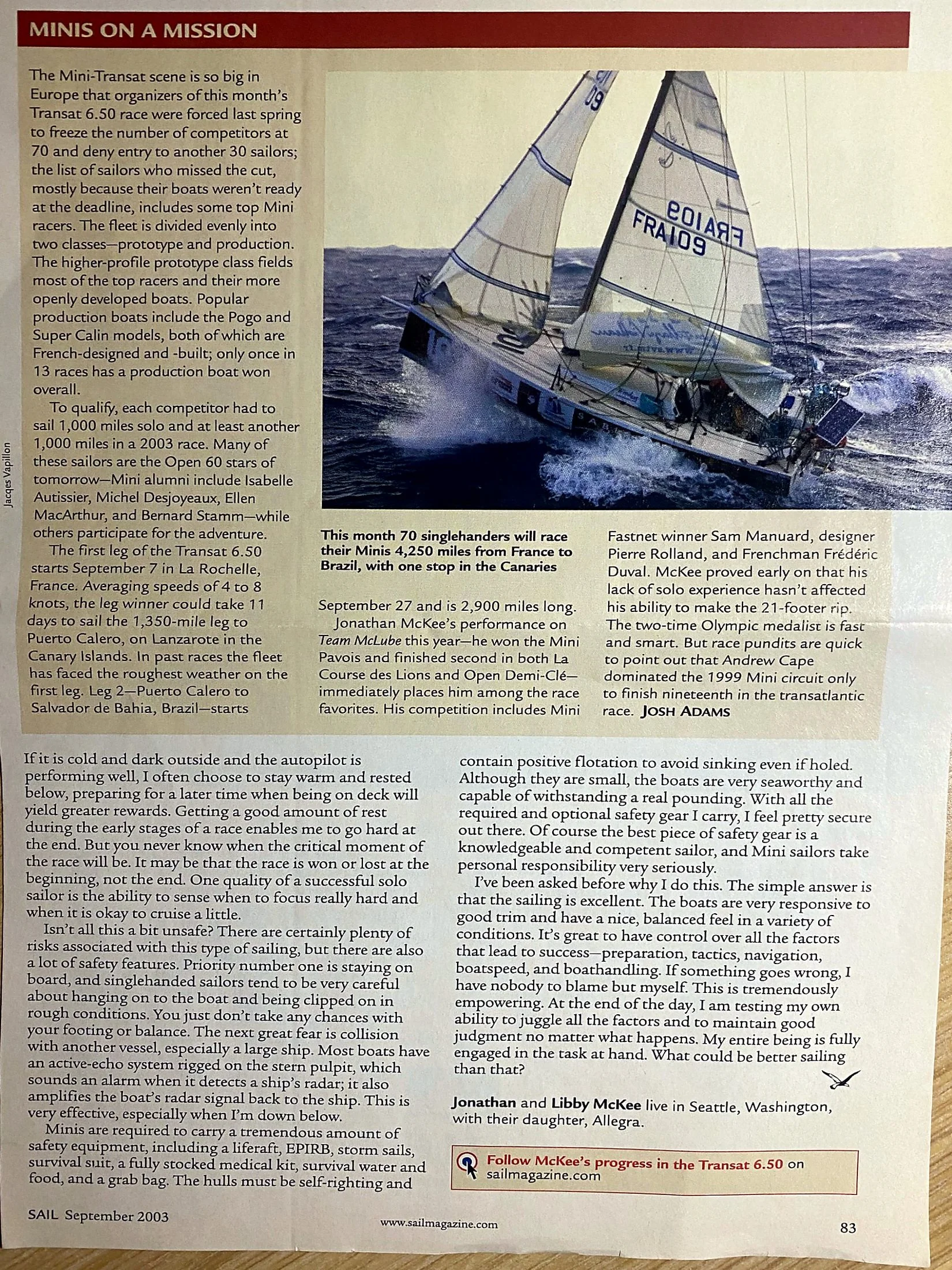
Minis on a Mission
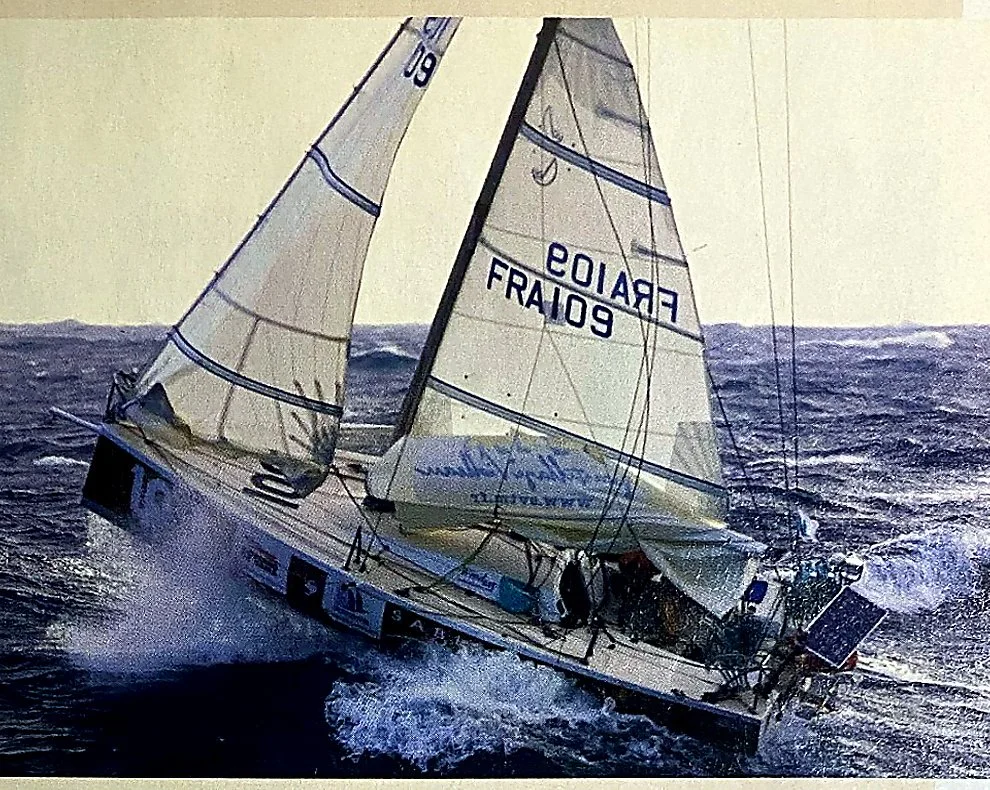
This month 70 singlehanders will race their Minis 4,250 miles from France to Brazil, with one stop in the Canaries.
The Mini-Transat scene is so big in Europe that organizers of this month’s Transat 6.50 race were forced last spring to freeze the number of competitors at 70 and deny entry to another 30 sailors; the list of sailors who missed the cut, mostly because their boats weren’t ready at the deadline, includes some top Mini racers. The fleet is divided evenly into two classes—prototype and production. The higher-profile prototype class fields most of the top racers and their more openly developed boats. Popular production boats include the Pogo and Super Calin models, both of which are French-designed and -built; only once in 13 races has a production boat won overall.
To qualify, each competitor had to sail 1,000 miles solo and at least another 1,000 miles in a 2003 race. Many of these sailors are the Open 60 stars of tomorrow—Mini alumni include Isabelle Autissier, Michel Desjoyeaux, Ellen MacArthur, and Bernard Stamm—while others participate for the adventure.
The first leg of the Transat 6.50 starts September 7 in La Rochelle, France. Averaging speeds of 4 to 8 knots, the leg winner could take 11 days to sail the 1,350-mile leg to Puerto Calero, on Lanzarote in the Canary Islands. In past races the fleet has faced the roughest weather on the first leg. Leg 2—Puerto Calero to Salvador de Bahia, Brazil—starts September 27 and is 2,900 miles long. Jonathan McKee’s performance on Team McLube this year—he won the Mini Pavois and finished second in both La Course des Lions and Open Demi-Clé—immediately places him among the race favorites. His competition includes Mini Fastnet winner Sam Manuard, designer Pierre Rolland, and Frenchman Frédéric Duval. McKee proved early on that his lack of solo experience hasn’t affected his ability to make the 21-footer rip. The two-time Olympic medalist is fast and smart. But race pundits are quick to point out that Andrew Cape dominated the 1999 Mini circuit only to finish nineteenth in the transatlantic race.
Original magazine pages
The pages below are perspective-corrected reproductions of the supplied magazine copy. Open any page to inspect the original layout at full size.